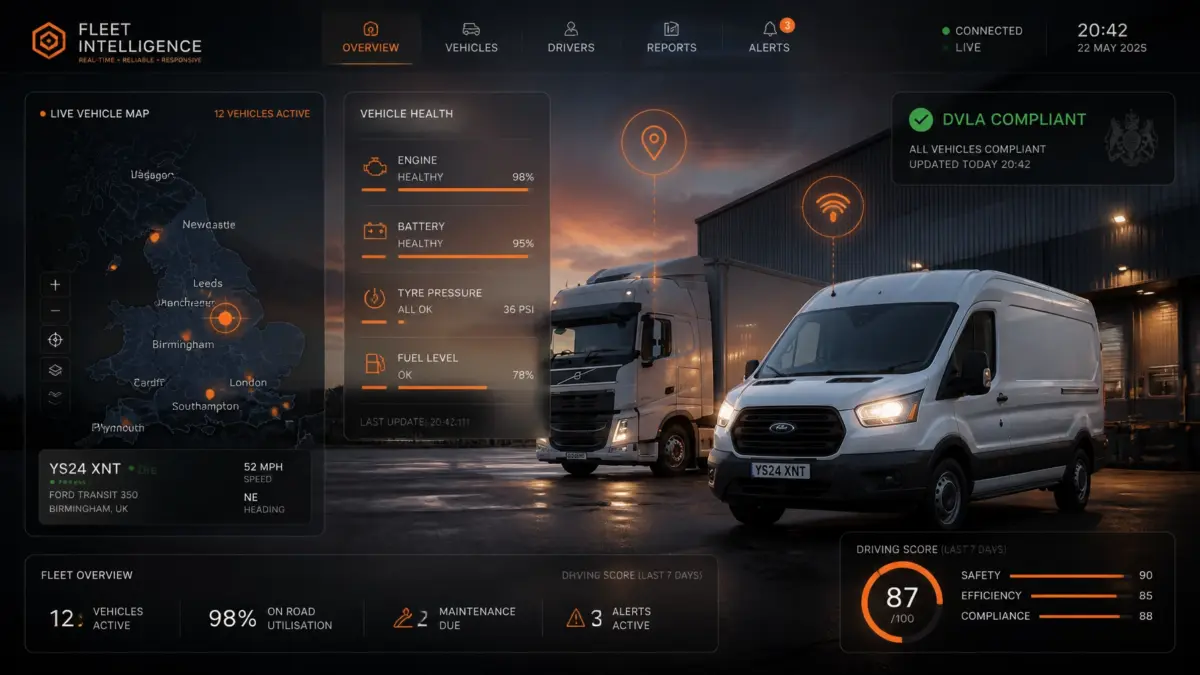
If you’re running a fleet of vans or trucks in the UK, the goalposts just moved. It’s July 2026, and the days of "checking a driver’s photocard once a year and hoping for the best" are officially dead. Between the DVLA’s aggressive push toward a fully digital ecosystem and the new tachograph mandates for smaller vehicles, the margin for error has hit zero.
At Engineer M8, we don't do boardroom theories. We build software for the contractors and fleet managers who are actually on the road. You need systems that work as hard as your engineers. You need to know that when one of your team pulls away from the yard, they’re licensed, the van is taxed, and your liability is covered.
Here are the 10 critical things you need to know about fleet management and DVLA compliance right now.
1. The Death of Manual Licence Checks
If you’re still asking drivers to show you their photocard or email a "check code" every six months, you’re wasting time and risking your business. The 2026 standard is automated, real-time verification. Tracking Guardian now integrates directly with the DVLA database to perform automatic driver licence checks. It doesn't just check if they have a licence; it checks categories, endorsements, and medical restrictions without you lifting a finger.
2. The 2.5-Tonne Tachograph Milestone
As of this month, July 2026, the rules for light commercial vehicles (LCVs) have tightened. If you operate vehicles over 2.5 tonnes in cross-border or cabotage operations: including many electric vans and small trucks: you are now bound by Smart Tachograph Version 2 requirements. This isn't just for the "big rigs" anymore. If you haven't updated your fleet tracking uk hardware to handle these records, you’re looking at heavy fines at the roadside.
3. Real-Time ANPR Enforcement is Everywhere
The DVLA and DVSA have significantly expanded their ANPR (Automatic Number Plate Recognition) network across the UK. These cameras aren't just for speeding; they are cross-checking every plate against the DVLA database for MOT, road tax, and insurance status in milliseconds. If your asset tracking software isn't flagging an expired MOT before the driver hits the road, the police will do it for you.
4. The Digital Wallet and "Instant" Data
The transition toward digital driving licences via the GOV.UK digital wallet is in full swing. While physical photocards are still valid, the DVLA is prioritising digital-first notifications for medical conditions and renewals. Your fleet management software uk needs to be able to ingest this data instantly. Relying on paper trails in a digital wallet world is a recipe for a compliance gap.
5. Driver Behaviour is Now a Liability Metric
In 2026, "safe driving" isn't just about avoiding accidents; it’s about data. Insurers are now looking at fleet scorecards to determine premiums. Tracking Guardian provides deep-dive analytics on driver performance: harsh braking, rapid acceleration, and idling. If you aren't using this data to coach your drivers, you're paying too much for insurance and likely ignoring a ticking time bomb in your workforce.

6. Digital Vehicle Inspections are Non-Negotiable
The old "daily walk-around" paper checklist is a liability. If a vehicle is involved in an incident, "I think he checked it" won't hold up in court. Using the EM8 HQ app, your engineers perform digital inspections with timestamped photos and GPS location tags. This creates an unshakeable audit trail that proves you take roadworthiness seriously.
7. Integrating Government Database Lookups
Why manually type in vehicle details? A modern field service management software platform should pull info directly from the DVLA. When you add a new van to Tracking Guardian, it should automatically populate the make, model, engine size, and CO2 emissions. This ensures your records are 100% accurate for tax and ULEZ/CAZ compliance across the UK.
8. The 56-Day Record Requirement
For those fleets now caught under the new tachograph rules, the record-keeping requirement has doubled. Drivers must now be able to produce 56 days of tachograph records during a roadside inspection (up from 28). If your fleet tracking uk system doesn't have a robust cloud-based backup for these records that drivers can access on their phones, you're leaving them out to dry during a DVSA stop.
9. Incident Recording and AI Evidence
When an incident happens, you need the facts, not "his word vs. theirs." Integration between fleet tracking and AI Redaction tools means you can share dashcam or CCTV footage with insurers while remaining fully GDPR compliant. Automatically obscuring faces and unrelated plates isn't a luxury; it’s a legal necessity when handling video evidence in 2026.
10. Scaling with a Unified Ecosystem
Fleet management doesn't exist in a vacuum. Your vans are driven by engineers who use VoIP Guardian to call customers and FireLog 365 to log fire alarm tests. Choosing a platform like Engineer M8 means your fleet data, job management, and compliance records all live in one place. One login. One source of truth.

The Bottom Line
The July 2026 DVLA updates and the broader shift toward digital enforcement mean that "good enough" is no longer an option for UK fleet operators. You either have the data to prove compliance, or you have a liability that could tank your business.
We didn't build Tracking Guardian to give you more paperwork. We built it to take the paperwork away, so you can focus on the jobs that actually pay the bills.
Ready to stop worrying about the DVLA?
Start a conversation with the team today and see how Tracking Guardian can automate your compliance before the next update hits.